"Fine"
May 19, 2026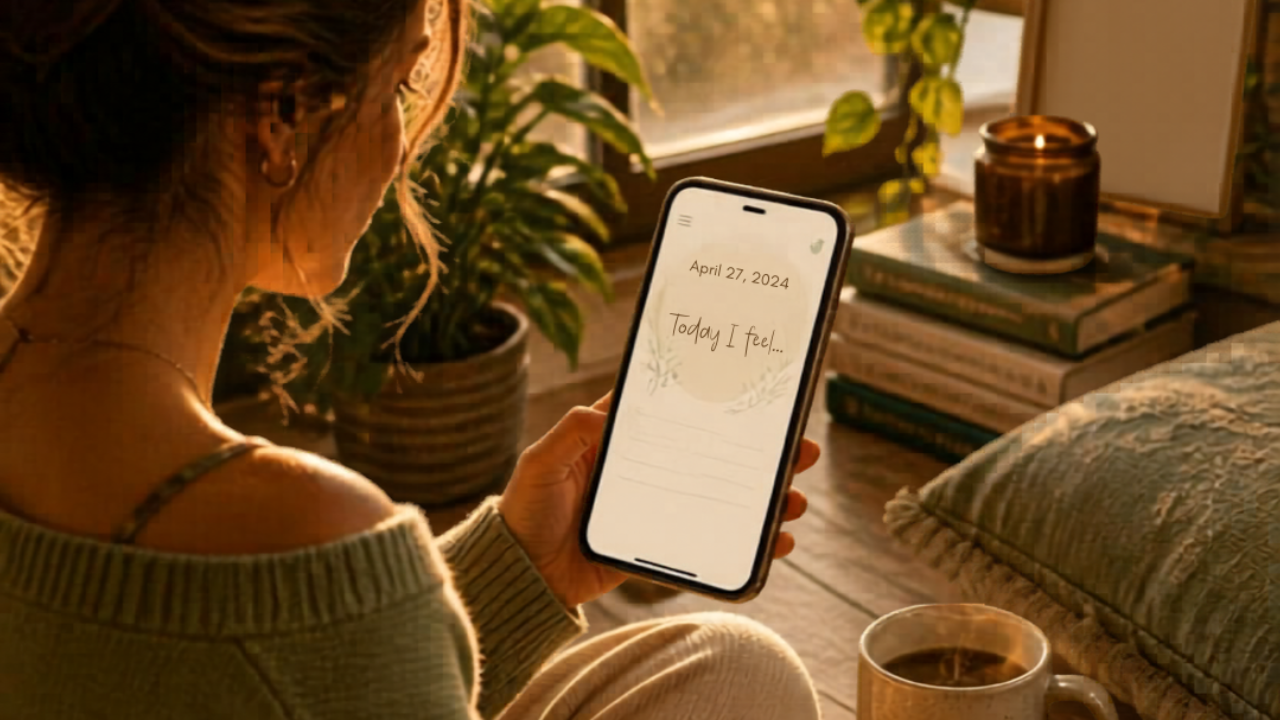
I was using a self-care app recently. It opened with a journal prompt.
How are you?
And before I even thought about it, my fingers started typing: I'm fine, how are you? I caught myself. Laughed a little. And then sat with it — because that moment said something I couldn't unhear. I had just given a self-care app a social reflex instead of an answer.
We know what "fine" means.
We hear it in our offices constantly. A client settles into the chair, you ask how the week was, and they say fine. Or good. Or pretty good, actually — with just enough lightness to signal that we probably shouldn't pull that thread.
We are trained to notice this. We know "fine" is often a placeholder. A way of taking up the right amount of space without taking up too much. A way of being present without being seen.
We know that underneath "fine" there is usually something else. Exhaustion. Grief. Numbness. The particular flatness that comes from managing too much for too long.
We know this because we were trained to look for it.
...And because we do it too.
The clinician's own "fine."
Here's the part worth sitting with:
What did you say when someone asked how you were this morning? At the coffee shop. In the parking lot. To your partner before you left the house.
Fine. Good. Busy. You know how it is.
We move through our days in the same protective shorthand we recognize in our clients — and often without noticing it. "Fine" keeps things moving. It protects us from having to explain. It protects other people from having to hold something they didn't ask to hold.
It is efficient. It is practiced. And it is, in its own quiet way, a form of self-abandonment.
Not a dramatic one. Not the kind that shows up in a diagnosis. Just the everyday kind — the accumulated habit of not checking in with yourself honestly because there isn't time, or space, or anyone who's really asking.
What it means to sit across from "fine."
When a client says "fine" and you catch it — when something in you goes hmm, let's slow down here — that instinct is clinical. But it's also personal.
Because you know what "fine" costs. You know the energy it takes to maintain. You know the particular loneliness of moving through a day untouched by a single honest exchange.
You know this not just from your training. You know it from your own morning.
That's not a liability. That is actually one of the most quietly powerful things you bring into the room — a lived understanding of what it means to be asked how are you and answer from the surface instead of the truth.
The question is whether you extend the same curiosity inward that you extend toward your clients.
An invitation.
The next time someone asks how you are — really notice what you reach for first. Not to perform honesty. Not to overshare. Just to notice the gap, if there is one, between what you say and what is actually true.
That gap is where a lot of our clients live. And if we're honest — it's where a lot of us live too.
"Fine" is not the enemy. Sometimes we genuinely are fine. But sometimes "fine" is a habit we've never thought to question.
And we, of all people, know what it means to sit with someone and gently ask: but how are you really?
We deserve someone who asks us that too.
Even if, for today, that someone is us.
Dr. Jamie English is a licensed clinical social worker, supervisor, and educator. The DJ English blog explores the inner life of the clinician — the parts of this work we don't always talk about out loud.
Follow reflections on body image, clinical work, and the ongoing work of becoming more fully ourselves